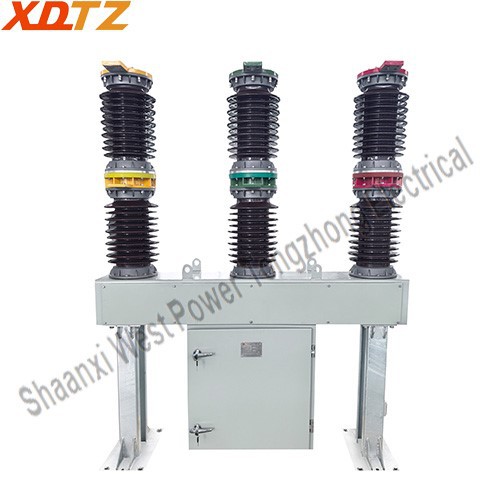

Electrical work must adhere to the "power outage, voltage testing, and grounding" procedure. The core of this procedure is to completely eliminate the risk of electric shock during the work process through a progressive approach, acting as three safeguards for the lives of workers.
First Safeguard: Power Outage – Completely Cutting Off the Energy Source
Power outage is the foundation and primary prerequisite for all safety measures. A seemingly simple "power outage" action actually involves the following strict technical requirements:
Cutting off all possible power sources: Power must be completely cut off from all possible sources of power to the equipment under maintenance (including both high and low voltage sides). The possibility of users' backup generators accidentally feeding power back into the system must also be considered.
The second step: Voltage testing – confirming "zero potential" on site.
A power outage does not mean no power. "Power outage" is merely a cutoff at the source, while "voltage testing" is the final confirmation of the on-site situation and is crucial for determining whether to proceed to the next step. Specific operational requirements are as follows:
Use a qualified voltage tester: A contact voltage tester that matches the equipment's voltage level and has passed inspection must be us.
Phase-by-phase, double-sided verification: Voltage testing must be performed on each phase (live wire) on both the incoming and outgoing lines of the equipment under maintenance.
Indirect voltage testing as an auxiliary judgment: When direct voltage testing is not possible, it is possible to indirectly determine whether the equipment has no voltage by checking two or more signals from different principles or sources, such as mechanical indications and electrical instruments on the equipment.
Preventing "False No Power": Capacitors, long-distance cables, and other equipment may store residual charge after power is cut off. This needs to be discharged using specialized equipment such as discharge rods. Testing for voltage without discharging may lead to a false conclusion of "no power," posing a risk of electric shock.
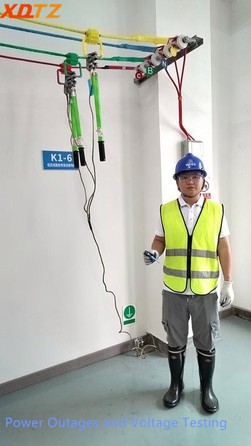
The Third Step: Grounding – The Most Reliable Final Protection and "Safeguard" After voltage testing, grounding wires must be installed at both ends of the work site.
Conduction Principles and Sequence: The cross-sectional area of the grounding wire must meet the requirements of the short-circuit current and must not be less than 25mm². Its installation and removal must strictly follow the sequence of "connecting the grounding end first, then the conductor end." The removal sequence is reversed to ensure that the operator is always under ground potential protection.
Regulations and Work Procedures: These safety measures are core contents of mandatory regulations such as the "Electrical Safety Work Regulations" (DL409-91). The specific sequence is as follows:
Power De-energization
Electrical Testing
Installation of Grounding Wire
Hanging Warning Signs and Installing Barriers (Fences) Any action that skips any step due to time constraints, experience, or other reasons is a serious violation of regulations.
Lessons Learned in Blood: Why Every Step Matters
The following cases vividly illustrate that omitting any step can cost lives:
The abandoned line was actually energized, resulting in the ground supervisor being electrocuted and killed upon touching a detached grounding stake.
in summary
In summary, the three measures of power outage, voltage testing, and grounding are interconnected and indispensable: power outage cuts off the source, voltage testing confirms the situation on-site, and grounding provides the final guarantee.
Hot sell product
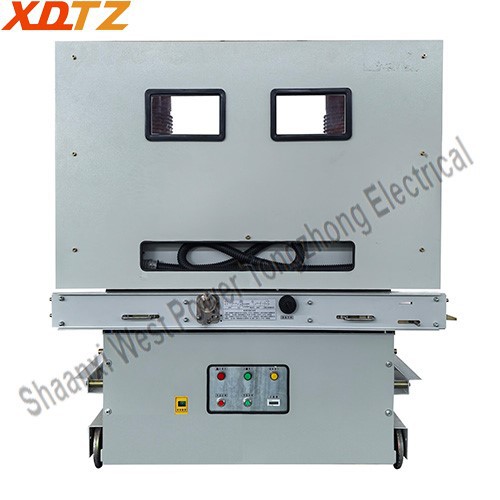
The new generation ZN85-40.5 vacuum circuit breaker is an upgrade product based on the 35kV vacuum circuit breaker with the 3AV3 mechanism as the main body. It has been fully optimized and upgraded in terms of mechanical transmission, mechanism body, secondary circuit, and other aspects. This product is an indoor switchgear with a rated voltage of 40.5kV and AC 50Hz.
Rated Voltage: 40.5kV
2. Operating Mechanism: Modular operating mechanism.
3. Installation Method: Floor handcart type.
4. Compatible Cabinet: Compatible with KYN61 switchgear with widths of 1400mm and 1680mm.
5. Product Compliance with Standards: GB/T1984-2014, GB/T11022-2011.
6. Product Advantages: E2-C2-M2 performance, convenient maintenance, high conductivity performance, wide range of applications.
Shaanxi West Power Tongzhong Electrical Co., Ltd.
Our address
No. 1 East Gaoxin Avenue in the High-Tech Development Zone of Baoji City, Shaanxi Province,china
86-18091765882 (Grace liu sales manager )
xdtz04@westpowerelectric.com