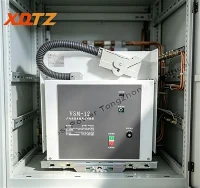

In high-voltage power distribution systems, load switches, disconnect switches, and vacuum circuit breakers are the three most common and easily confused types of equipment. Although they all perform the task of switching circuits, they differ fundamentally in their arc-extinguishing capabilities, operating conditions, and protective functions. A correct understanding of their respective roles is fundamental to ensuring equipment safety and protecting the lives of maintenance personnel.
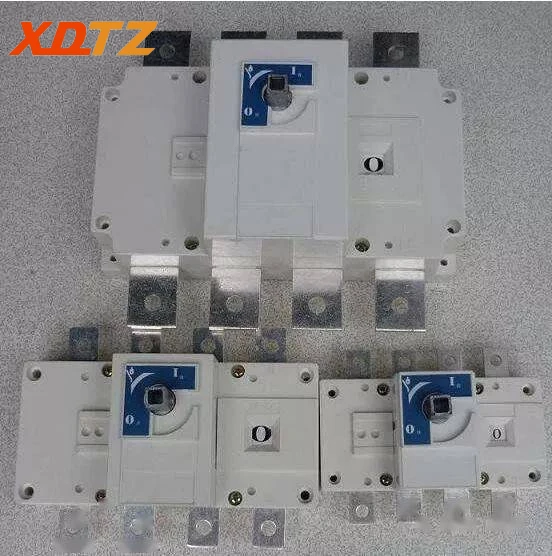
1.Disconnect Switches: Isolation Function Only, No Arc-Extinguishing Capability
Disconnect switches have the simplest structure and are not equipped with any arc-extinguishing devices. Their sole core mission is to "establish a visible physical disconnection point." Once the line has been confirmed to be without current through other means, operating the disconnect switch completely isolates the equipment under maintenance from the power supply, providing a clear safety credential for subsequent work.
It is particularly important to be aware that disconnect switches must never be operated under load. They cannot interrupt normal load current, let alone short-circuit fault current. Forced operation will trigger a strong arc, causing equipment burnout or even personal injury. In practice, disconnect switches are only permitted to be used to switch extremely small currents, such as bus charging current, voltage transformer excitation current, or unloaded transformer excitation current, and these must be strictly controlled within the equipment's permissible range.
2.Load Switch: Operable under load, but unable to handle short circuits
Compared to disconnect switches, load switches have an added simple arc-extinguishing device, thus possessing the ability to open and close under load. They can safely connect and disconnect rated load current and allow short-term overload current of a certain multiple.
However, the arc-extinguishing capability of load switches is limited, rendering them ineffective against sudden short-circuit faults. Therefore, in practical applications, they must be used in series with high-voltage current-limiting fuses to form a "combined electrical system"-normal operation is performed by the load switch, and in the event of a short circuit, the fuse quickly melts, interrupting the fault current. This solution is moderately costly and widely used in small-capacity distribution transformers (usually below 800kVA) and switching station lines.
3.Vacuum Circuit Breaker: A versatile protection device capable of interrupting short-circuit faults
Vacuum circuit breakers use high vacuum as the arc-extinguishing medium, possessing extremely excellent arc-extinguishing performance. Not only can it frequently switch on and off load current under normal conditions, but most importantly, when the system experiences serious faults such as short circuits, overloads, or undervoltage, the circuit breaker can instantly activate its protection mechanism, cutting off the huge short-circuit current and effectively protecting downstream lines and equipment.
The protection function of the circuit breaker is not implemented in isolation; it usually needs to cooperate with current transformers and various relay protection devices to achieve multiple intelligent protection strategies such as instantaneous tripping, overcurrent protection, and leakage protection. Its breaking capacity can be very high, therefore it is widely used in high-power motor circuits with frequent starts, large transformer outgoing lines, and critical locations such as hub substations.
4.Selection Summary and Safety Warnings
Clarifying the relationship among the three: Disconnect switches only provide safety isolation and have no protection function; operation under load is strictly prohibited. Load switches can be opened and closed under load and, in conjunction with fuses, can handle overloads, but cannot interrupt short circuits. Vacuum circuit breakers have the most comprehensive functions, can interrupt short circuits, and assume the responsibility of active protection.
Another detail worth noting: After a disconnect switch is opened, its break state and open/closed position are the only definite relationship guaranteed by mechanical interlocking; maintenance personnel can completely rely on its isolation effect. When a conventional circuit breaker trips, if an internal mechanism malfunctions, the contacts may not truly separate. Therefore, it cannot be used alone as a maintenance isolation method and must be used in conjunction with a disconnecting switch.
Correctly selecting and using these three types of switches is not only a basic requirement for technical compliance but also an inviolable red line for high-voltage work safety.
Shaanxi West Power Tongzhong Electrical Co., Ltd.
Our address
Nanpo Village, Chencang Avenue Jintai District Baoji City, Shaanxi Province, China.
Phone Number
+86 18091765882(WhatsApp/Wechat/facebook)