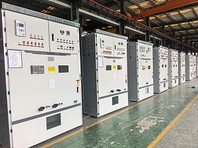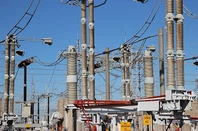

Reactive power compensation refers to the technical measures used in power systems to improve the power factor, stabilize voltage, and reduce energy loss by adding additional electrical equipment (such as capacitor banks) to provide or absorb reactive power.
In AC circuits, not all electrical energy is effectively utilized. Active power (kW) is the electrical power that actually does work and is converted into mechanical or thermal energy;
while reactive power (kVAr) is used to exchange energy in the electromagnetic fields of motors, transformers, and other equipment to maintain equipment operation, but does not output effective mechanical work.
The working principle of reactive power compensation:
In power systems, most loads (such as motors and transformers) are inductive loads, causing the current to lag behind the voltage.
The core idea of reactive power compensation is local balancing: capacitors are connected in parallel near the inductive load, using the leading current generated by the capacitors to offset the lagging current generated by the motor.
In this way, the reactive power required by the load is provided locally by the compensating capacitors, without needing to be transmitted from distant generators, thus freeing up transmission line capacity.
Products Description
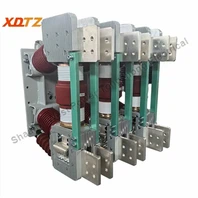
(TZ15)-12/31.5 indoor high voltage grounding is a product with international advanced level developed by advanced technology, and its structure is assembled. The performance meets the requirements of GB/T1985-2024 "AC High Voltage Disconnector and Earthing Switch" and IEC 6271, and is suitable for 3-12kV three-phase AC 50Hz power system.
Our address
No. 1 East Gaoxin Avenue in the High-Tech Development Zone of Baoji City, Shaanxi Province, China
Phone Number
+86 180 9176 5658
xdtz03@westpowerelectric.com