

High-voltage circuit breakers and low-voltage circuit breakers, although both belonging to the "circuit breaker" family, differ drastically in voltage level, application scenarios, structure, and working principle. Aside from their basic function of "cutting off the circuit," they are practically two completely different types of equipment.
🔌 A Clear Dividing Line: Voltage Level and Application Scenarios
The core basis for distinguishing between high-voltage and low-voltage circuit breakers is voltage level.
Low-voltage circuit breakers: These typically refer to circuit breakers operating at AC 1000V and below or DC 1500V and below. They are the common "air switches" found in our daily lives, widely used in end-point power distribution in homes, buildings, and factories.
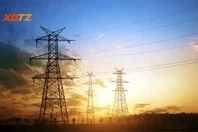
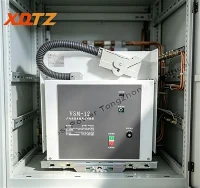
High-voltage circuit breakers: These are used in power systems of 3kV and above. They are core equipment in power plants, substations, and transmission lines, responsible for controlling and protecting the main network of the entire power grid.
⚙️ From "Light Cavalry" to "Heavy Armor": Huge Differences in Structure and Working Principle
Due to their vastly different operating environments, their internal structures and operating principles are also completely different.
Arc Extinguishing Methods: The electric arc generated when a high-voltage circuit breaker breaks is extremely intense, with voltages reaching 1500V and currents reaching 1500-2000A. The arc can even be stretched to 2 meters without extinguishing. Therefore, it must be equipped with specialized arc-extinguishing chambers and media such as oil, sulfur hexafluoride (SF₆), or vacuum to forcibly extinguish the arc. Low-voltage circuit breakers, on the other hand, primarily extinguish the arc in the air, using simple structures such as arc-extinguishing grids to cut, cool, and extinguish the arc.
Protection and Control Methods: This is a key difference. Low-voltage circuit breakers typically have built-in thermal tripping and electromagnetic tripping protection devices, capable of independently handling overload and short-circuit protection. High-voltage circuit breakers, however, are more like a "strongman" requiring external commands to operate; their opening and closing rely on external relay protection systems and control signals.
Appearance and Size: Due to the drastically different requirements for insulation and arc extinguishing, the size difference between the two is significant. Low-voltage circuit breakers are compact, small enough to fit into a home's electrical distribution box. High-voltage circuit breakers, especially air-insulated models, are extremely large in size to meet safety distance requirements under high voltage.
In short
Although high-voltage and low-voltage circuit breakers have similar names, they serve different levels of the power system. Low-voltage circuit breakers are highly integrated "protectors" that are close to our lives; while high-voltage circuit breakers are complex "heavyweights" that safeguard the main arteries of the power grid.
Shaanxi West Power Tongzhong Electrical Co., Ltd.
Our address
Nanpo Village, Chencang Avenue Jintai District Baoji City, Shaanxi Province, China.
Phone Number
+86 18091765882(WhatsApp/Wechat/facebook)