
In circuit breaker protection systems, short circuits and overloads can both cause abnormal increases in current, but their protection response times are significantly different. Short-circuit faults are usually accompanied by extremely high current levels that can rise rapidly. If the fault is not cleared quickly, it may cause serious damage to cables, transformers, and other electrical equipment. Therefore, circuit breakers generally use different protection mechanisms, allowing short-circuit protection to respond within a very short period while overload protection operates according to the magnitude and duration of the current.
1
Electromagnetic Release Responds Rapidly to Short-Circuit Currents
When a short-circuit fault occurs, the current in the circuit can increase sharply within a very short time. The coil in the electromagnetic release is subjected to a strong electromagnetic force. Once the current reaches the preset level, the resulting force activates the trip mechanism and causes the circuit breaker to open rapidly.
Since this operation is mainly driven by the electromagnetic force generated by the current, the response is extremely fast, allowing protection to operate before the short-circuit fault can cause further damage.
2
Overload Protection Requires a Certain Response Time
Unlike short circuits, overloads are usually caused by a sustained increase in load current and do not necessarily indicate an immediate severe fault. Therefore, overload protection generally evaluates both the magnitude and duration of the current before initiating an operation.
By applying an appropriate operating characteristic, the protection system can avoid unnecessary tripping caused by temporary starting currents or short-term current fluctuations while still providing effective protection against sustained overload conditions.
3
Fast Interruption Helps Protect Electrical Equipment
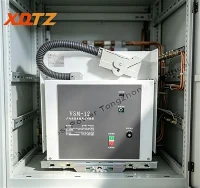
Although short-circuit and overload protection operate differently, both are designed to limit the impact of abnormal currents on electrical equipment. For medium voltage vacuum circuit breakers, fast and reliable fault interruption is particularly important. Once the protection system sends a trip command, the operating mechanism must quickly open the contacts, while the vacuum interrupter effectively interrupts the fault current.
Therefore, the difference between fast short-circuit protection and relatively slower overload protection is not simply a matter of response speed. It reflects a protection strategy designed around different fault characteristics, balancing rapid fault interruption with the prevention of unnecessary tripping during normal operation.
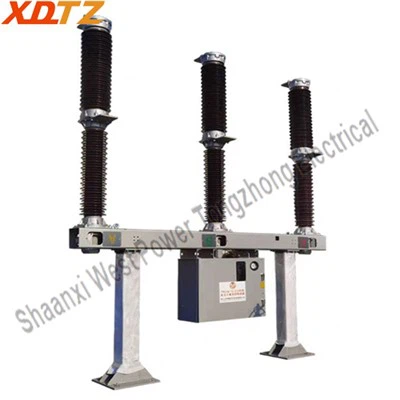
If you want to know more about LW25-126 Outdoor High Voltage Porcelain SF6 Circuit Breaker please feel free to contact us at any time.
How To Cooperate With Us?
Shaanxi West Power Tongzhong Electrical Co., Ltd.
Our address
No.1 East Gaoxin Avenue, High-tech Development Zone, Baoji City, Shaanxi Province, China
Phone Number
+86 18091765658(WhatsApp/微信)