
From Physical to Virtual: The Birth of Digital Twins
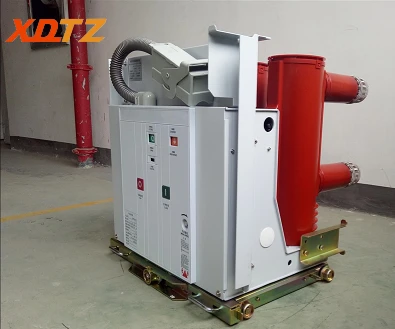
Imagine a high-voltage switchgear in a substation, containing a circuit breaker about to close. Previously, maintenance personnel could only remotely monitor via voltage and current curves, unable to truly "see" what was happening inside the mechanism. Digital twin technology is changing all that.
By constructing a three-dimensional geometric model based on the circuit breaker's electrical components and integrating real-time operational data collected by sensors (such as temperature, vibration, and operating current), engineers create a dynamic digital mirror in virtual space that is completely synchronized with the physical device. This digital twin is no longer a static three-dimensional model, but a "living" mirror that reflects the equipment's health status in real time.
"Practicing" Every Opening and Closing Operation
The true value of digital twins lies in "practicing." Based on an electromagnetic-mechanical behavior model built from ordinary differential equations (ODEs), digital twins can simulate the electromagnetic and mechanical dynamic processes inside the circuit breaker's opening and closing coils. By combining measurable data (such as coil current and mechanical force) with parameter identification algorithms, digital twins can infer drift in unmeasurable parameters, such as changes in damping coefficients and reductions in spring stiffness.
In short: Before the physical circuit breaker operates, the virtual circuit breaker has already completed a full "pre-run" in digital space. It calculates whether the coil current is sufficient to overcome resistance, whether the damping is within the normal range, and whether the travel curve meets expectations. Once an anomaly is detected-for example, the coil current is lower than normal at a given voltage-the system immediately issues a warning.
From "Routine Maintenance" to "Condition Monitoring Maintenance"
The operation and maintenance model driven by digital twins is rewriting traditional equipment management logic. Digital twin integration platforms can also proactively warn of critical and serious defects. Upon receiving a warning, maintenance personnel can perform remote operations to save operation time and reduce the probability of accidents.
In practical applications, using digital twin technology for asset health management allows the system to accurately identify equipment anomalies and predict failure risks, thereby reducing downtime costs. Leveraging machine learning algorithms, digital twins can also combine operational history with real-time simulations to predict remaining useful life (RUL).
The Future is Here: "Smart" Switchgear
With the deep integration of multiphysics coupling modeling, artificial intelligence algorithms, and digital twin technology, digital twins are evolving from "pre-release tools" into intelligent systems capable of autonomously assessing equipment health and recommending maintenance plans.
Future circuit breakers will no longer be merely mechanical devices executing opening and closing commands-they will "sense" their own state with each operation, predict their own aging in the virtual world, and issue warnings before failures occur. From passive "post-failure maintenance" to proactive "pre-failure replacement," digital twin technology is turning this possibility into reality.
Shaanxi West Power Tongzhong Electrical Co., Ltd.
Our address
Nanpo Village, Chencang Avenue Jintai District Baoji City, Shaanxi Province, China.
Phone Number
+86 18091765882(WhatsApp/Wechat/facebook)