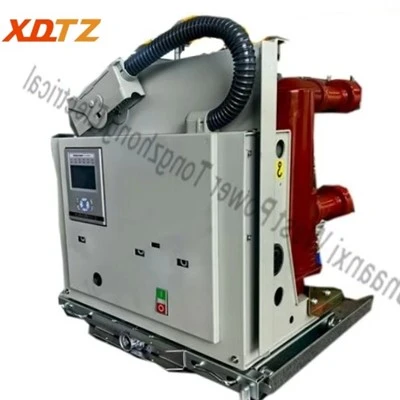

Failure of a circuit breaker to close or open is a relatively common issue during the operation and maintenance of power equipment. Without a clear troubleshooting sequence, unnecessary disassembly and repeated inspections may increase maintenance time. In practice, when a circuit breaker fails to close or open, technicians should first check the control power supply and electrical circuit based on the operating symptoms, and then inspect the operating mechanism and transmission components to improve fault diagnosis efficiency.

Check the Control Power and Electrical Circuit First
When a circuit breaker fails to close or open, the first step is to confirm whether the control power supply is normal, including the control voltage, fuses, auxiliary contacts, and closing and opening coils. If the control circuit has an open circuit, poor contact, or insufficient voltage, the circuit breaker may fail to complete the required operation even when the mechanical mechanism is functioning properly.
Inspect the Mechanical Mechanism After the Electrical Circuit
Is Confirmed If the control circuit and coils are operating normally, the mechanical mechanism should then be inspected. Key points include checking whether the operating mechanism is sticking, whether the transmission components are functioning properly, whether the energy-storage system is in the correct state, and whether the mechanism operates smoothly. Mechanical wear, deformation, or improper lubrication may cause the circuit breaker to fail to close or open.
Diagnose the Fault Based on Operating Symptoms
During troubleshooting, the cause of the fault should not be determined based on a single component alone. For example, if the coil operates normally but the circuit breaker contacts fail to complete the closing or opening operation, attention should be focused on the mechanical mechanism and transmission system. If the coil does not operate at all, the control circuit should be checked first. Following the sequence of "electrical circuit first, mechanical mechanism second" can reduce unnecessary disassembly and improve troubleshooting efficiency. Overall, when a circuit breaker fails to close or open, following a proper troubleshooting sequence can significantly improve maintenance efficiency. By first checking the control power supply and electrical circuit, followed by the operating mechanism and transmission components, and combining these checks with the actual operating symptoms, technicians can locate the fault more accurately and help ensure the stable and reliable operation of the circuit breaker.
If you want to know more about VTZ-12 Series Indoor Phase-selective Switching Intelligent Vacuum Circuit Breaker please feel free to contact us at any time.
How To Cooperate With Us?
Shaanxi West Power Tongzhong Electrical Co., Ltd.
Our address
No.1 East Gaoxin Avenue, High-tech Development Zone, Baoji City, Shaanxi Province, China
Phone Number
+86 18091765658(WhatsApp/微信)