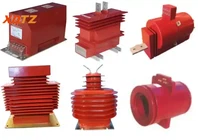

The Physical Essence and Engineering Topology of Current Transformers
In the field of electrical engineering, the debate over whether a current transformer (CT) is a "transformer" or a "converter" often stems from confusion regarding its underlying physical mechanisms and macroscopic application characteristics. From a strict electromagnetic theory perspective, a current transformer is essentially a special type of transformer. However, in power system engineering practice, to emphasize its function of converting large currents into standard small currents at a precise ratio, it is historically referred to as a "converter." This duality in terminology reflects the characteristic emphasis of the same physical device in different application dimensions: as a transformer, it is a passive sensing element based on magnetic circuit coupling; as a converter, it is the source of standardized measurement and protection links in the power system.

Unlike conventional voltage transformation transformers, which are driven by a "voltage source" and pursue high impedance matching, current transformers are topologically defined as current source devices. Its primary side exhibits extremely low series impedance, and the core design principle is to minimize the additional voltage drop and power loss on the measured main circuit. Under steady-state operating conditions, the secondary circuit of the current transformer must be connected to a load with extremely low impedance (such as a sampling resistor or relay coil) to keep it in a near-short-circuit operating state. This operating characteristic is the most fundamental engineering difference between it and ordinary transformers. Once the secondary side is open-circuited, the demagnetizing ampere-turns disappear instantly, and the entire excitation magnetomotive force on the primary side will cause deep core saturation. This will not only induce dangerous high-voltage spikes of several thousand volts in the secondary winding but also trigger a severe residual magnetism effect, permanently destroying the transmission linearity of the equipment.
The interplay between transient response, error mechanism, and materials science
In professional applications, evaluating the performance of current transformers cannot be limited to the ratio and phase shift.When a short-circuit fault occurs in a power system, the fault current often contains a large aperiodic DC component. For traditional electromagnetic current transformers with silicon steel cores, DC bias causes the operating point to rapidly shift into the nonlinear region of the magnetization curve, leading to severe transient saturation. At this point, the secondary output waveform will exhibit clipping distortion, causing relay protection devices relying on zero-crossing detection or phase comparison to fail to operate or malfunction.
To address this issue, modern high-precision and protection-grade current transformers have undergone significant compromises and innovations in materials science. In addition to using cold-rolled silicon steel sheets with high saturation magnetic flux density and low coercivity, high-end metering and power quality analysis equipment widely incorporates permalloy or amorphous/nanocrystalline alloy toroidal cores. These materials possess extremely high initial permeability and ultra-wideband response (covering DC to tens of kHz), effectively suppressing hysteresis errors and high-frequency harmonic distortion under light loads. Furthermore, for ultra-high voltage and smart substation scenarios, traditional electromagnetic structures are gradually evolving towards coreless Rogowski coils and all-fiber optic current transformers. Rogowski coils utilize a hollow core to eliminate magnetic saturation and nonlinearity issues. Combined with a high-precision integrating circuit, they achieve perfect linear transmission from microamperes to kiloamperes, completely breaking the physical constraints of traditional iron core materials.
A Cutting-Edge Paradigm of Digital Reconstruction and Quantum Precision Measurement
With the full implementation of the IEC 61850 standard, the functional boundaries of current transformers are being redefined. Traditional current transformers (CTs) require A/D conversion in a local merging unit, while next-generation electronic current transformers (ECTs) and low-power current transformers (LPCTs) directly integrate high-precision sampling and digital encoding on the high-voltage side, transmitting the data directly to the control room via fiber optic in SV (Sampled Value) messages. This architecture not only fundamentally solves the electromagnetic interference and grounding current problems caused by long cable transmission but also provides a nanosecond-level time reference for panoramic synchronous phasor measurement of the power grid.
Even more disruptive is the engineering breakthrough in quantum precision measurement technology. Quantum current transformers based on diamond nitrogen-vacancy (NV) color centers represent the forefront of this field. This technology abandons the traditional electromagnetic induction path, utilizing the extremely high sensitivity of NV color centers to weak magnetic fields to directly invert the magnetic field distribution around high-voltage conductors through an optical readout mechanism. Currently, prototypes based on this principle have achieved long-term stable operation in substations with voltage levels of 110kV and above, marking the formal transition of current measurement technology from the "classical electromagnetic era" to the "quantum sensing era."
VTZ-15/T5000-63 indoor high-voltage generator circuit breaker
VTZ-15/T5000-63 indoor high-voltage generator circuit breaker is a vacuum circuit breaker designed for generator outlets in 15 kV and lower, three-phase AC 50 Hz systems. It is primarily utilized in the plant auxiliary circuits of small to medium-sized hydroelectric generator units, thermal power generators, new energy generation systems, and industrial facilities-such as those in the chemical and processing sectors-that operate with their own captive power generation capabilities.

Technical parameteres:
1.Rated Voltage:15kV
2. Operating Mechanism: Integrated operating mechanism.
3. Installation Method: Floor-standing, Fixed-mounted Drawout Unit
4. Compatible Cabinet: Special fixed cabinet from the XGN series.
5. Product Compliance with Standards: GB/T 1984-2014, GB/T 11022-2011, GB/T 14824-2021.
Product Features: High current capacity and breaking capability, cooling capacity, elliptical cross-section insulation, equalizing rings.
Shaanxi West Power Tongzhong Electrical Co., Ltd.
Our address
No. 1 East Gaoxin Avenue in the High-Tech Development Zone of Baoji City, Shaanxi Province,China
86-18091765882(Sales manager Grace liu )
xdtz04@westpowerelectric.com